
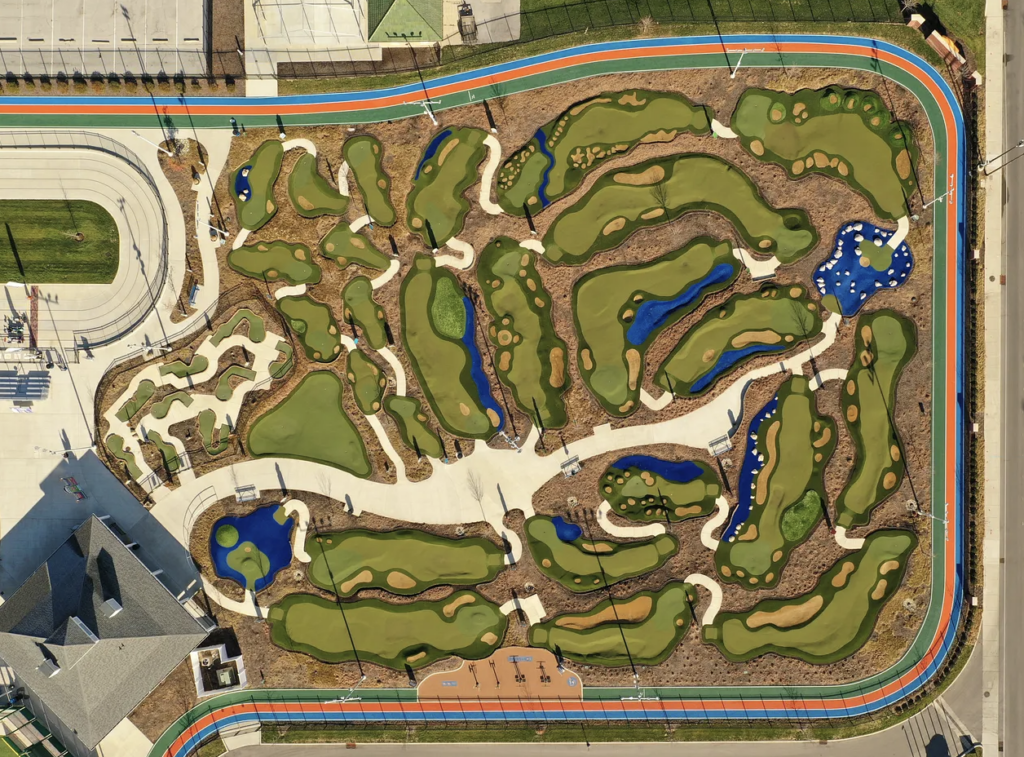
The Pete and Alice Dye Putting Course
A World-Class Championship Putting Course
Oh, what a time I had.
I was like a kid walking into Disneyland for the first time. Here I was walking into The Children’s Museum of Indianapolis, home to the Pete and Alice Dye putting course exhibit. I had been looking forward to this experience for some time. It is quite possibly the largest synthetic turf putting course complex in North America.
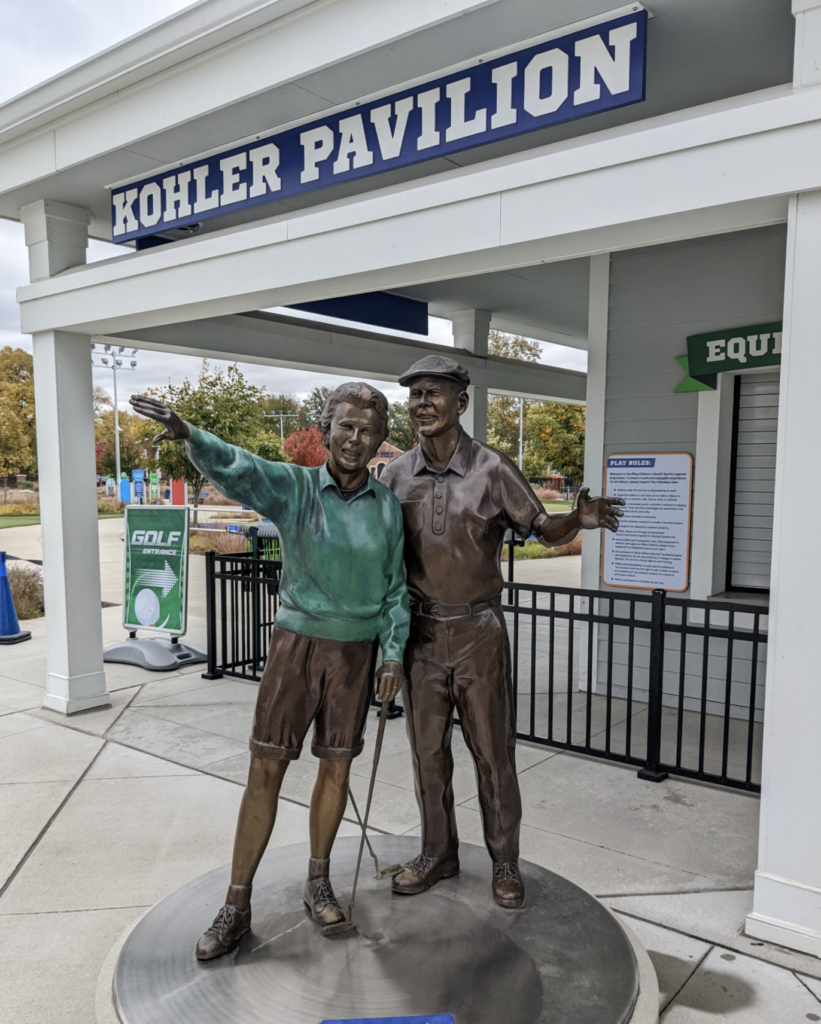
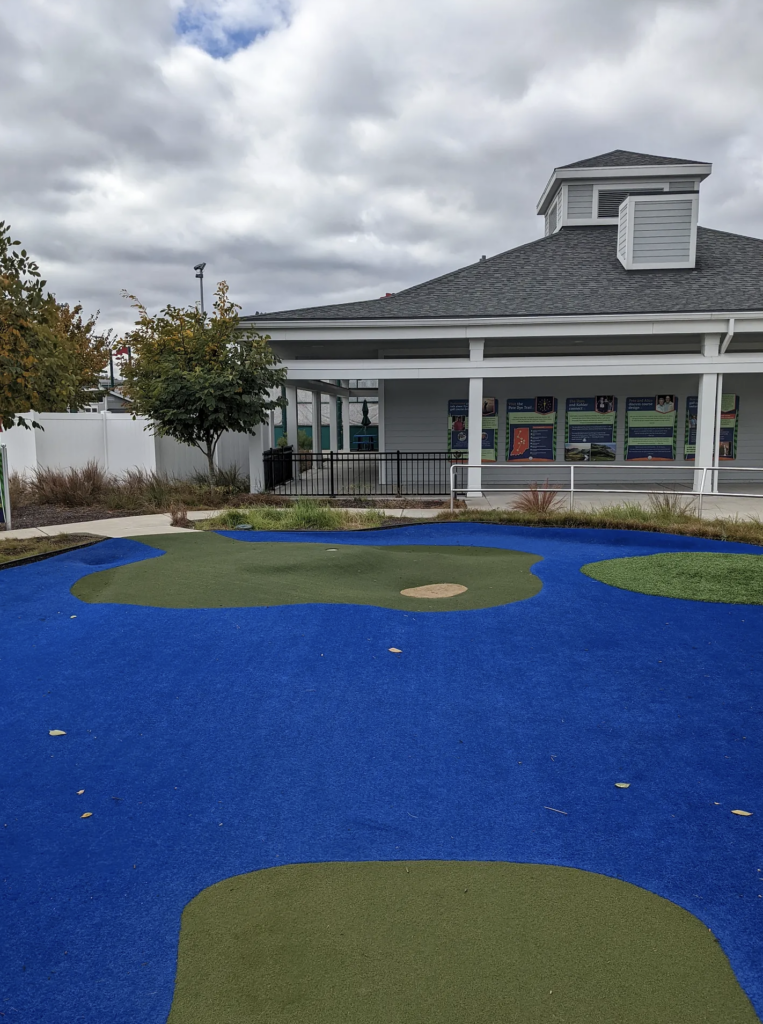
The facility came equipped with a practice green, a 9-hole toddler course, a 9-hole introductory course and two 9-hole championship sized courses which all spread across nearly 2 acres of land in inner city Indianapolis.
I met with the General Manager, Caleb Bailey. He was happy to tell me a lot about the process of the build, working with Peter and Alice Dye and how the project came to be financed. He also shared with me that the day before my arrival the putting course had over 800 inner city youth come and participate in the local First Tee event. 800 kids!!!
The first thing I noticed were the miniature tennis balls and 6” cups. My ‘golf traditionalist’ radar was firing the alarm! The ball didn’t come off with the same pop that a real golf ball would have but, I have to say, once I calibrated a little, it was a ridiculous amount of fun. Caleb told me that they have the option of putting inserts into the 6” cup and playing the course with real balls but because it was so well received, they just stick with 6” holes and tennis balls.
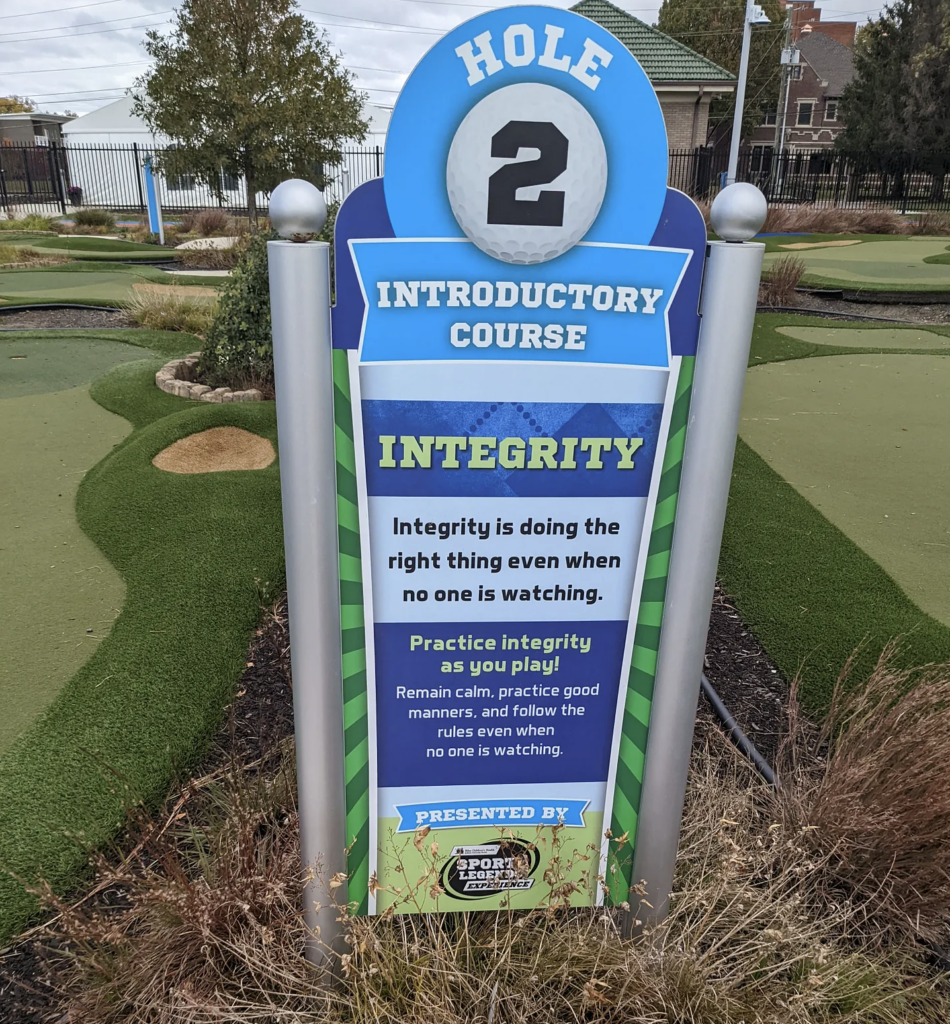
At the beginning of each of the 9 holes of the introductory course there was a First Tee Core Value listed and described. The core values being:
Honesty, Integrity, Sportsmanship, Respect, Confidence, Responsibility, Perseverance, Courtesy and Judgement
What a great concept to implement. Some healthy feelings as you explore the course!
The championship courses were all miniaturized versions of Mr. Dye’s most famous golf holes. I.E. The 17th at Sawgrass, #18 at Harbourtown Golf Links or “Teeth of the Dog” at Casa De Campo Resort. The beauty of the design was that it really made you think. You must get your lines and distances correct to give you the best opportunity to score well. There was an appropriate amount of risk reward, and the risky lines would take perfect accuracy and distance to get right, otherwise deep bunkering or faux water hazards awaited!
There are pros and cons to building a putting course on this scale. The cons are mainly the costs to build, and the pros are this; You are coming much closer to creating a putting course to its fullest potential.
I have filed this experience away in my data bank of inspiration, and if I am ever in Indianapolis again, I will not hesitate to go spend another afternoon here. For me, pure joy. For the First Tee program and the kids in that community, a learning opportunity. For the donors who funded it, a legacy. For golf in small spaces, a huge win.